

Xin Chào
This initiative was created from the need to understand how a Czech-Vietnamese identity is influenced and shaped by different cultures. As a Vietnamese-born in Czechia we want to get to know more about our Vietnamese heritage and roots.
We believe it is important to learn and understand one’s culture. This solidarity project is about sharing stories and creating conversations to encourage open and honest discussions that confront the misrepresentations of Vietnamese culture. We aspire to build a safe space where people can prosper and feel secure in exploring and accepting their cultural identities without fear of judgment.
There is a desire to enable and ensure an inclusion in the society. By sharing historical background and life stories, Czech people would have insights into Vietnamese immigrant’s life.
Roots of the Future is about breaking a new ground and creating a welcoming space for exchange and learning.
Here we will share our journey.


-
To the Future and Beyond!
Let us take you on a journey to teach you about the history of our parents and close ones, who moved to foreign countries in hopes of finding a better life.
This blog was created for those who are interested in learning about family, cultural and mostly Vietnamese origins. Here you will get a chance to read stories of people who left their home back in Vietnam and came to Czechia and much more about Vietnamese heritage.
This project deals with the lack of information that some of young people have regarding their parent’s immigrant background. By sharing stories about our culture, we hope to connect more people together and underline the importance of knowing the history of (y)our culture. With this project we aspire to pass these stories on future generations.
By learning and understanding the history of our roots, we believe it is fundamental for shaping our future world.
„Don’t forget that the culture that is going to survive in the future is the culture that you can carry around in your head.“ – Nam June Paik
-
Přednáška: Vzpomínky na Tết
Zveme Vás na další kulturní akci pořádané Solidárním projektem „Roots of the Future“

📆Datum: 31/3 2023
 Čas: od 17:00
 Místo: vietnamská restaurace Bambus v Českých Budějovicích!
 Tématem bude vietnamský Nový Lunární rok – Tết.
Na co se můžete těšit?
Povíme si, jak vypadá jeden z nejvýznamnějších svátků v Asii, o čem je a jak ho slaví Vietnamci. Připravili jsme si pro Vás přednášku, která bude obohacena o vzpomínky na Tết. Jak ho vietnamští přistěhovalci slavili ve Vietnamu a jak ho slaví v Čechách?
Zapojíte se do interaktivních aktivit, kde můžete vyhrát věcné ceny!
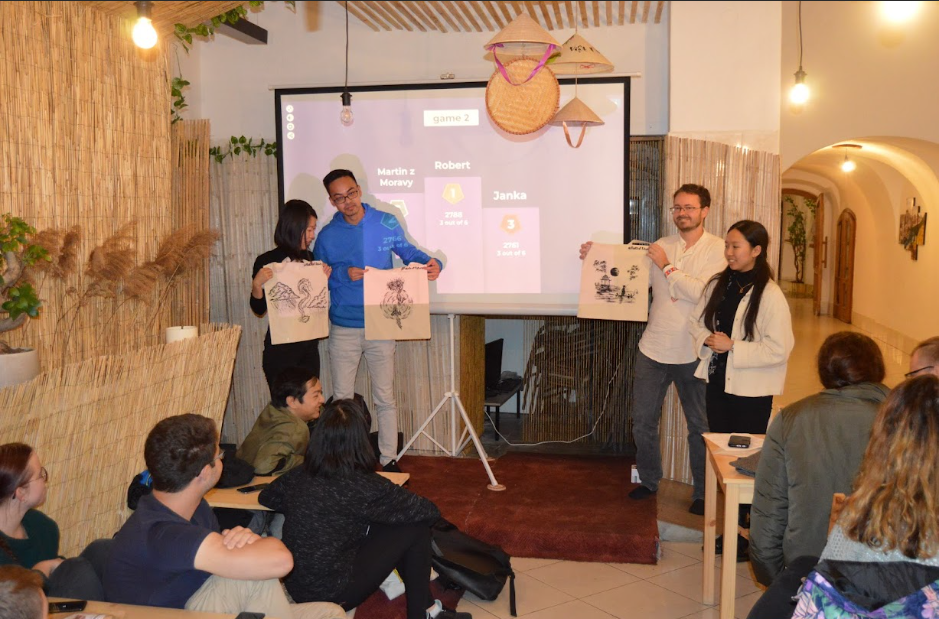
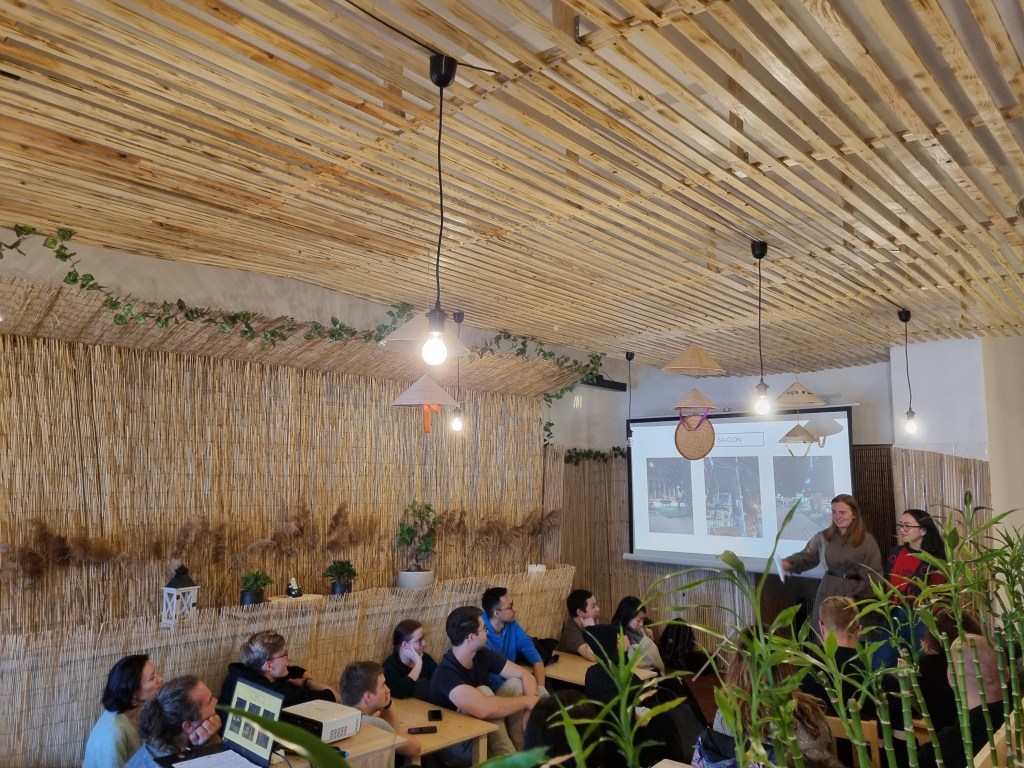
Aby byl zážitek co nejautentičtější, zažijete vietnamské stolování. Navrhli jsme s kuchařem speciální menu, které se bude skládat z tradičních jídel Tết a ochutnávku vietnamského čaje Master Vietnam.


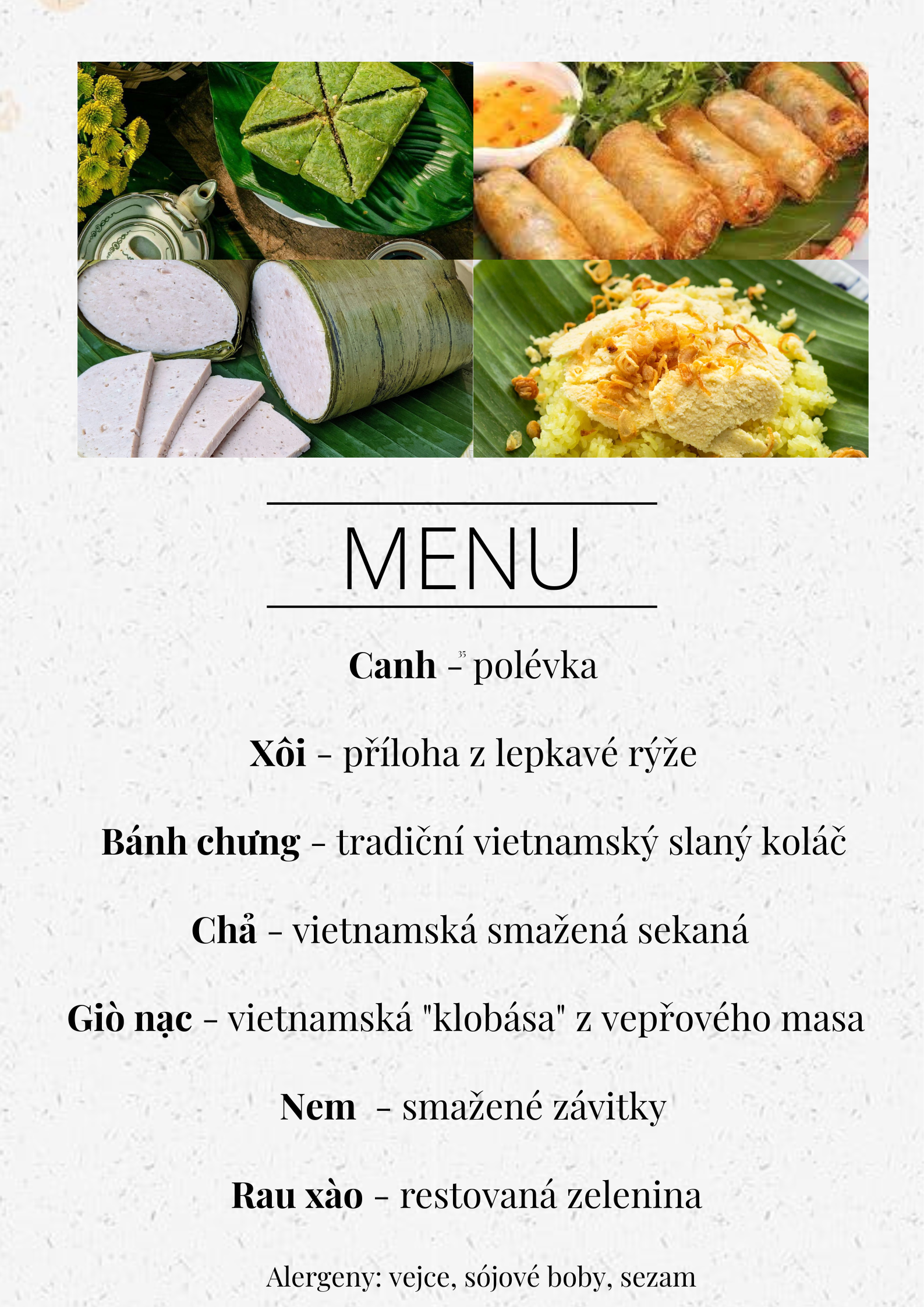 Menu (včetně vegetariánského) najdete v registračním formuláři – viz. dále
  Registrujte se hned! Máme omezená místa.
https://forms.gle/FaT9TaPvMqDhNjGK6 Vstup je dobrovolný, platí se pouze menu za zvýhodněnou cenu 289 KčPro více informací se podívejte na naši Facebook událost: https://www.facebook.com/events/s/prednaska-vzpominky-na-tet/744821297331208/
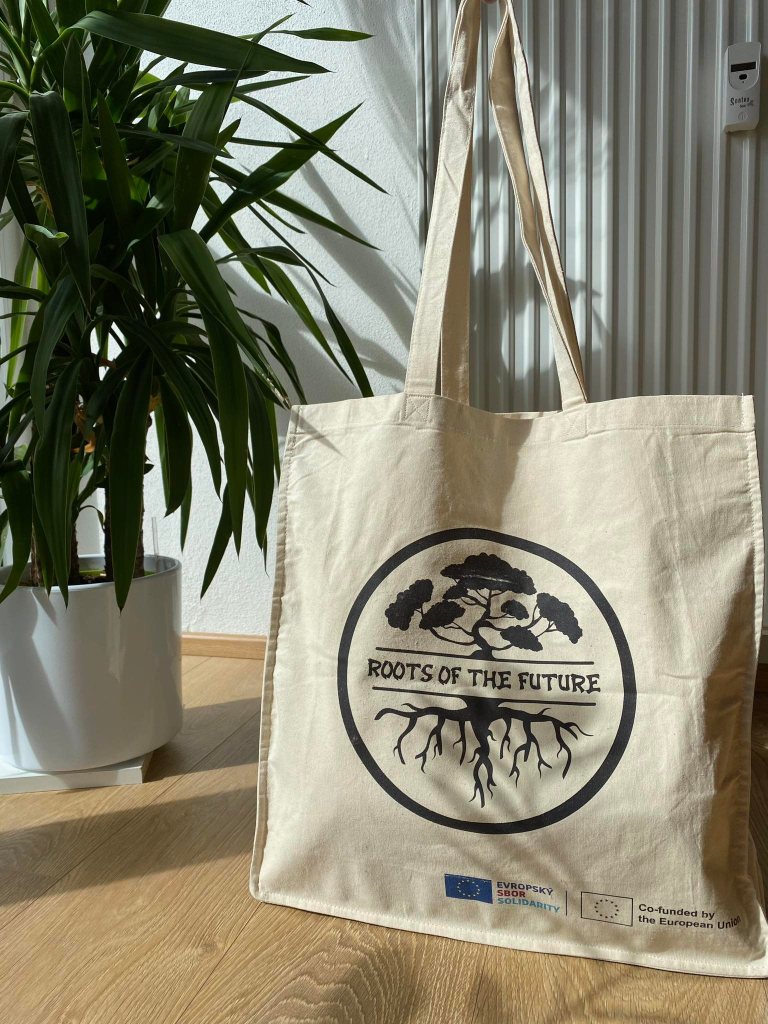
Tento projekt je vytvořen v rámci Evropského Sboru Solidarity a je spolufinancován Evropskou Unií.

-
How Oral History methodologies could be used as a tool for intercultural dialogues?
- Abstract
- Intercultural Dialogue
- Intercultural Competences
- Oral history methodologies
- Solidarity Projects (European Solidarity Corps)
- Conclusion
Abstract
This paper is going to provide several proposals to address the demand on social cooperation to tackle the challenges of increasing inequality, xenophobia and racism. In order to achieve cooperation, there is urgency to rebuild trust and cultural understanding.The debate on intercultural dialogues has been growing in significance as the disparities emerged. Especially among marginalised, minoritized, and racialised groups. This paper will survey on how to expand knowledge on building trust and understanding through cultural dialogues and how oral history could be a useful tool to create opportunities for cultural exchanges, facilitate development of intercultural skills and engage different generations. For cooperation between different stakeholders, it will consider bringing forward initiatives on the local level and encourage young people to come together to counter future crisis and take ownership on solving problems.
Intercultural Dialogue
The European Court of Human Rights has recognised the importance of plurality: ‘It’s the genuine recognition of, and respect for, identities for achieving social cohesion’[1]
Living together as equals in dignity can help to overcome the challenges of living together in a diverse society. This is a concern that was firmly articulated by governments, non-governmental organisations (NGOs) in general and migrant associations alike. It emerged that all spheres should be engaged in intercultural dialogue in the neighbourhood, the workplace, the education system and associated institutions, civil society and particularly the youth sector. Every actor should enage to address an urgency for consultation of accumulated good practise, dissemination and replicate the positive experiences.
The framework for enabling intercultural dialogue initiated by UNESCO and Institution for Economics and Peace has provided some facts that there are the connections between intercultural dialogue and sustainable peace, conflict prevention.
‘Intercultural dialogue is understood as an open and respectful exchange of views between individuals, groups with different ethnic, cultural, religious and linguistic backgrounds and heritage on the basis of mutual understanding and respect’ [2] Therefore the intercultural dialogue it’s one of the key aspects for integration.
Integration has an important role to play in social cohesion. It is understood that inclusion is a „process and the capacity of people to live together with full respect for the dignity of each individual, the common good, pluralism and diversity, non-violence and solidarity…” There are needs for effective integration action that will allow immigrants to participate fully in the life of the host country, in social, cultural, economic and political life.
With the data from 160 Member state of the UNESCO Framework for Enabling Intercultural Dialogue, there are 1.5 billion people who are at risks of forced displacement, extreme poverty, discrimination, and violence is higher. ‘89% of conflicts are occurring in countries with low capacities for intercultural dialogue… ‘[3] There are various consequences of non-dialogue: risks of developing stereotypical perception of the other if there aren’t any engagement in dialogue. It can develop tension and anxiety because of the climate of mutual suspicion. The minorities could be used as scapegoats and in general lack of dialogue foster intolerance and discrimination. [4] It denotes that’s the management of cultural diversity is needed at every level of governance, from local to regional to national to international.
It’s probable that in certain cases, the breakdown of dialogue withing the societies would lead to exploitation by some of extremism and terrorism. The stifling conformism deprives everyone of the benefit of cultural enrichment, that is necessary for personal and social development in a globalised world. If segregation continues, it’s obvious that the hostile climate poses a threat to exercise of human rights and fundamental freedoms.
However, pluralism, tolerance and open mind might not be sufficient: there is necessity for pro-active joint effort in managing cultural diversity and prepare all young generation for a world of increasing complexity, diversity, and mobility.
Intercultural Competences
A key for the Dialogue Practise is intercultural competences, the skills that could be mastered and enable people to engage in dialogue. These competences and capacities will allow the individuals and the societies meet personal fulfilment and reach social harmony.[5] Self-cultural awareness and pluralistic spirit are the abilities that can be applied to interpret other cultures in fair and meaningful ways. Once an individual is aware of its own strengths and limitations, they can find different resources for learning by alternative visions in ethics, aesthetics, and worldviews. Consequently, they will have capability to extend his horizons and get enriched both in spiritual and intellectual ways.
Intercultural competences will allow to individuals and societies to „perform effectively and appropriately when interacting with others who are linguistically and culturally different from oneself ”[6]By apprehension the variety of social and cultural context, people would become ready to produce utterances considering the wide variations of contextual factors.
Oral history methodologies
Oral history methodology is an academic approach with an aim to create the collection and study with personal experience about individuals, families, important events and everyday life. It’s an intention of creating a permanent record to contribute to an understanding of the past. ‘All cultures are outcomes of intercultural communication.’ [7] Therefore, studying the histories of cultures that are different from ours allows the creation a frame of reference that can lead to better intercultural communication. The oral history methodology can facilitate relationships and interactions among people from various origins and cultures.
Oral history methodologies are used mostly as an investigation tool within historian societies. Thanks to its interdisciplinary, the examples are analysed from the point of view of sociology, psychology.
Due to the naturalistic approach Oral history methodology has, it aims to explain the human complexities and highlight the man’s capability in shaping the existences. It provides people’s understanding of and sensibility towards contemporary events, perceiving the essence of time and historical constructs’ functionalities. The Oral history engages with currents of contemporary history, it analyses the challenges and potentially it can provide insights and solutions to the existing problems. This research methods can enable the marginalized groups to be heard as sometimes they have been wrongly neglected in the realm of history[8] and provide equal opportunities of different groups such as woman, proletarians, soldiers, and migrants, etc.
In regard of histography, the interviewers hold responsibility toward the society, public opinion, duty to history and towards archiving and sponsoring institutions.
There are certain limitations, the result of the interview are always modified and changed from the original story because of the process of interpretation. During the interview, there is the necessity to reflect on the topic and carefully prepare before the interview. Interviews should be conducted with prior agreement made with the narrator. To provide an accurate and correct information, interviewers should work to achieve a balance between the objectives of the project and the perspective of the interviewees as well to be critical to their own prejudices and personal biases while interpreting the story. The narrator has an equal authority in contributing to the research and it is respected how the narrator will decide to answer the given questions.
Oral history can develop trust and create the beginning points for the new space for interactions, exchange and sharing different experiences and values within coexisting cultures. Among intercultural competences, ones that are considered as indicators for successful dialogues are: the ability in communication in multiple languages (multilingualism) and the skills of conveying the same idea through different languages. (translation)[9] To contribute the solutions of long-standing social problems of social order. There is the necessity for actions which would facilitate the aggregation of patterns of social interactions and cooperation.
Solidarity Projects (European Solidarity Corps)
Solidarity project is a European Union initiative which gives young people in Europe an opportunity to realize their idea and bring a positive change on the local level, it allows them to express their creativity while developing another necessary life-skills like cooperation, communication and management. These skills are important for youngsters to have to adopt to the fast paced world and develop the ability to navigate themselves in the increasing diversly world.
The local project Roots of the Future is establishing the opportunity for co-authored change by inviting young people with immigrant background in to experience the dialogue to understand the value first-hand immigrant’s life story and it wants to extend it to other parts of Czech society. The dedication and commitment for positive change should be taken over time to ensure the methodological inclusion of diverse social groups and to attend the intercultural competency skill building needs. Communication is a mean for sharing the common understanding and it allows people to work together in participatory way.
The aim of the youth-led project Roots of the Future is to bring an intercultural interaction as a comprehensive approach driven by commitment leadership that cut across the cultural and generational divides. It implies strategic engagement of civil society, oral methodology and non-formal education approaches to develop the youth capacity to profit from the opportunities and become an active citizenship. Solidarity projects promotes democratic values and encourage young people to promote positive intercultural mixing and interactions. It encourages inclusion and power-sharing. While young people are the key element of the project, it is a participatory process that involves different NGOs, including the university, along with individual citizens.
One of the key aspects for its activities are non-formal education methodologies. It is an approach that consider the learner’s needs, the learning objectives and the structure is tailored for them. It’s an experience-based process that emphasizes useful and practical skills that could be used in daily life. To ensure the meaningful learning process, the environment is created to be inviting, empowering curiosity, and supporting creativity which allow the learners to develop own set of skills individually. The process involves the reflection part which allow them to think about their learning experience and outcomes and plan future activities. It invites everybody to avoid the confinement or ghettoization by offering new opportunities of multiple interpretations and unexpected discoveries.
Young people have unimagined opportunities for global conversations. The project is connecting cultural and digital literacy to create a resource for harnessing educational content and venues. Social medias are indispensable tool for transcending the clash of ignorance. The cultural encounters and life stories of immigrants will be presented on the social media.
Conclusion
The transformative tools for human dignity, mutual trust and share responsibilities lay in the fields of education, culture, science, communication, and information. On the basis of that, the measure of growing awareness will be depending on the approaches to unity-in-diversity or, even more, to achieve of unity beyond the diversity through participation and facilitation to help the individuals to negotiate cultural boundaries through their personal encounters and experiences. [10]
Studying the histories of other culture can be very helpful in improving the relationships with other cultures. There is a need to know and understand why ones communicate the way how he or she does. By understanding the role of history in intercultural communication, it can lead to better communication because it gives a frame of reference how the past influences the way how these communities communicate today.[11]
When people could take part in organisational change it has a greater impact rather them taking autoreactive approach and imposing these changes on people. Dialogues allow to identify the need or opportunity and to co-author the change. [12]
The dialogue take place when participants have their own perspective and recognize different perspectives and remain open to learn about others. Oral history inclined to be “soli-logue” when the communication is unidirectional and mostly one’s viewpoint is presented. During an interview the active listening is an essential skill, critical thinking and open mind. It requires comprehension but not necessarily agreement. But it can provide diverse viewpoints on the knowledge about the minority history background, the motivations and learning about their life which can lead to compromise between competing positions, collaborative planning and problem solving.
Participants who actively partake in social interaction, gain new experiences. Through dialogues they collect different viewpoints and achieve new facts. Any person who is interested in contributing to the understanding of community history and share interesting personal stories to enrich the understanding of immigrant’s culture. This fact causes the minority’s lives and social interaction to be understood better.
In order to contribute the solutions of long-standing social problems of social order. There is the necessity for actions which would facilitate the aggregation of patterns of social interactions and cooperation.
In that spirit, the content and the structure of youth-led Solidarity project, which uses Oral history methodology for intercultural dialogue, is to provide comparative study, coming up with the strategy, testing and implementation. It’s an opportunity to discuss with experts from Oral history department and Civil society in the Faculty of Liber Arts and Humanity Studies in the Charles University who will contribute to the study and explore the possibilities to develop the concept and guidelines for meaningful application of approaches to contribute to intercultural dialogues.
The awareness of one’s cultural identity influence the coherence of the community. The stories that are being told and maintained determine how identity is integrated. The identity changes as these stories, that people tell repeatedly about themselves and each other, change. The project Roots of the Future aims to create a space for the dialogues where people can talk and think together, inter-dependent needs and interests could be revealed. Co-authored stories can integrate the identity and the sense of the community.
[1]United Nations Educational, Scientific and Cultural Organization, “We need to Talk, Measuring intercultural Dialogue for peace and inclusion,” 6-7.
[2] Council of Europe Ministers of Foreign Affairs, „White Paper on Intercultural Dialogue „Living as Equals in Dignity,““ 5.
[3] Gabriela Ramos Assistant Director-General for the Social and Human Sciences of UNESCO, interview
[4] Council of Europe Ministers of Foreign Affairs, „White Paper on Intercultural Dialogue „Living as Equals in Dignity,““ 10.
[5] Council of Europe Ministers of Foreign Affairs, „White Paper on Intercultural Dialogue „Living as Equals in Dignity,““ 16.
[6] Fantini, Alvino and Tirmizi, Aqeel, „Exploring and Assessing Intercultural Competence“ (2006). World Learning Publications. Paper 1.
http://digitalcollections.sit.edu/worldlearning_publications/1
[7] UNESCO, „Intercultural Competences, Conceptual and Operational Framework“
[8] The Methodolofy and Approaches to Oral History in Historical Research, http://www.oral-history.ir/?page=post&id=4915
[9] Prison Dialoue, „Theory of Dialogue,“ https://www.prisondialogue.org/theory-of-dialogue
[10] UNESCO, „Intercultural Competences, Conceptual and Operational Framework,“ 4. https://unesdoc.unesco.org/ark:/48223/pf0000219768/PDF/219768eng.pdf.multi
[11] https://www.prisondialogue.org/theory-of-dialogue
[12] https://www.prisondialogue.org/theory-of-dialogue
This communication reflects the views only of the author, and the Commission cannot be held responsible for any use which may be made of the information contained therein.
-
What is a Solidarity project?🤔
‚A Solidarity Project is an activity that a young person can carry out in a group of five people or more to help to bring positive change to the local community. It is set up and implemented by young people themselves in a place where they live.’🏠🌏
‚Together with addressing the local challenges, a Solidarity Project should also demonstrate European value by taking priorities identified at European level such as, for instance, inclusion, climate change, democratic engagement, citizenship or gender equality.’*
*Resource: European Youth Portal
🌱Our 12 month long project @roots.of.future involves 2nd immigrants generation by encouraging them to be curious about their family history and cultural origins.
👉By using oral history methodologies it aims to collect the stories and life experiences of their parents and close ones.
👉By sharing these stories and insights with society it foresees bridging intercultural, intergenerational and social divides.
✨The project wants to change reception and integration of refugees and migrants and create an inclusive society through active citizenship and cooperation.
When it comes to a realisation of a project, the utmost question is WHY?
🌱@roots.of.future was created from the desire to understand better cultural influence on one’s identity and personality and the need to discover the roots of origins
🌸 We would like to honour traditions and customs that define and shape our multicultural identity
🥭 it’s an occasion to give back to our roots and prepare for the better Future
Have your Why.🤞

-
‚Vạn sự như ý!‘ 🎋 ‚May you have all that you desire!‘
🌸Family reunions are important part of Vietnamese culture. ‚Tết Nguyên Đán‘ is a time-honored tradition that defines Vietnamese culture. Among the most important tradition practices is visiting family, relatives and expressing gratitude to friends and teachers and paying respect to ancestors.
🌸Having each other is one of the greatest blessing one can ever ask for.
🌸Most of immigrants who are far from home don’t have chance to spend the holidays with their loved ones. Their Tết are based on the memories of childhood (‚Tết trong tim ta‘, ‚Tết is within our heart‘), The spirit of Tết are brought into life through storytelling and preparing some traditional food. The scents of the ‚Bánh Chưng‘ (A savory square cake made of sticky rice, mung bean paste and pork filling) ‚Nem Chua‘ (Sour salami), ‚Canh Măng‘ (bamboo soup) and other traditional food would be shared alongside with the nostalgia…Before enjoying the food, it’s usual to present them first to the altar as a form of paying respect to our ancestors and deceased family members.
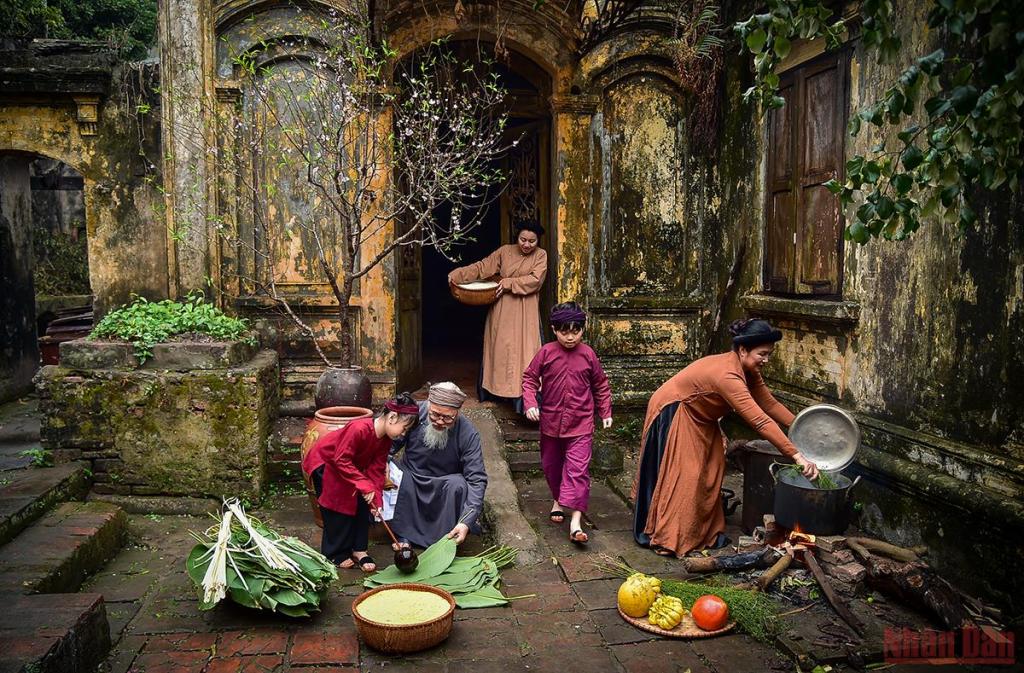
🌸Tet is usually celebrated for 15 days, but the most important are considered the first three days.
1️⃣“Mồng Một Tết cha” the first day usually dedicated to sharing new year greetings and visiting our immediate families
2️⃣“Mồng Hai Tết chú” the second day is about visiting our mom’s side of the family and the in-laws of the family.
3️⃣“Mồng Ba Tết thầy” the third day we are visiting our educators and teachers, though nowadays this also include visiting our friends as well.
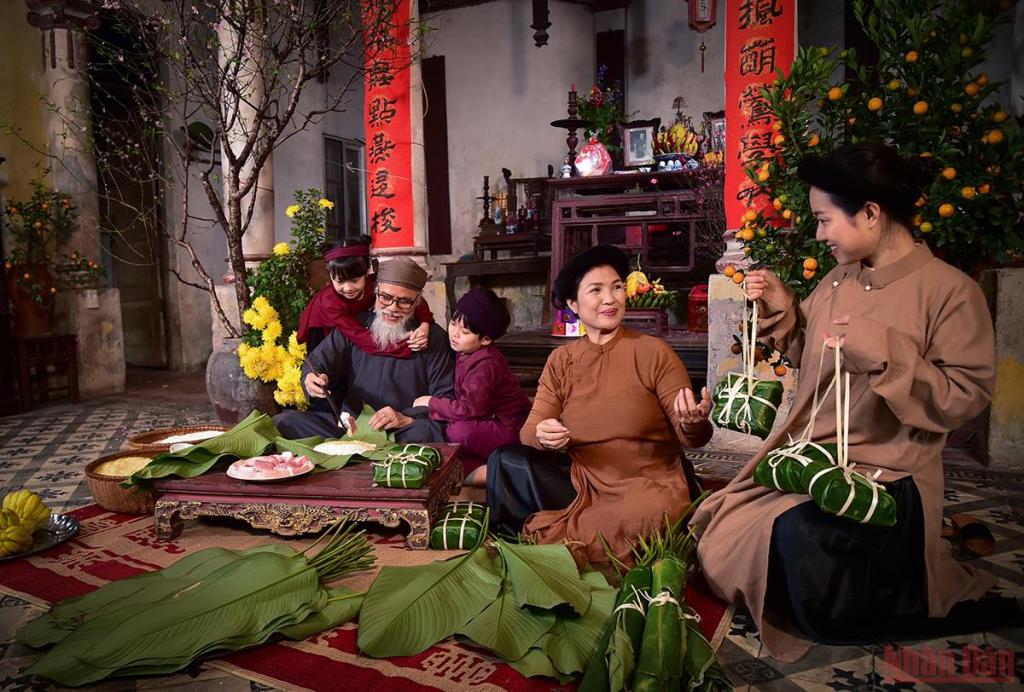
🎋Tết is a chance to reflect on our accomplishments and appreciate everyone around us. It’s also a moment to reconnect with our roots and learn about our cultural heritage. We encourage you to take advantage of this festive mood and make a connection with your close ones, be curious to start conversations and learn more about your roots and cultural aspects.
Photos by Thành Đạt
#lunarnewyear#tết#home#family#tradizione#identity#culture#vietnaminczechia#minority#exchange#explore#roots
-
Happy Lunar New Year 2023
🎋🌸 | Chúc Mừng Năm Mới!
🌸Peach blossom has very important meaning for Vietnamese people, especially during the first three days of Lunar New Year. These bright pink flowers symbolize prosperity and good fortune. It is believed that having these flowers in the house will bring happiness, peace, good health and weath for the whole family in the upcoming year.
🌸Legend said that the peach blossom and its vibrant colors can repel the evil spirits and symbolize longevity.
🎋Roots of the Future wish you another year of success, happiness, longevity, prosperity. May these bright flowers bring perseverance and reliability – two essential traits for being successful in life.


About Us
The 12 month long project involves young people with immigrant background by encouraging them to be curious about their family history and cultural origins.
Roots of the Future is about discovering the Vietnamese roots of youngsters with immigrant background in the Czech Republic through storytelling and exchange.
We encourage youngsters to become curious about their own heritage and culture through sharing the stories of their parents and close people in order to identify multiple identities.
‘The youth is the hope of our future’.
– Jose Rizal
Follow Us On


Subscribe To My Newsletter
Subscribe for new travel stories and exclusive content.

